
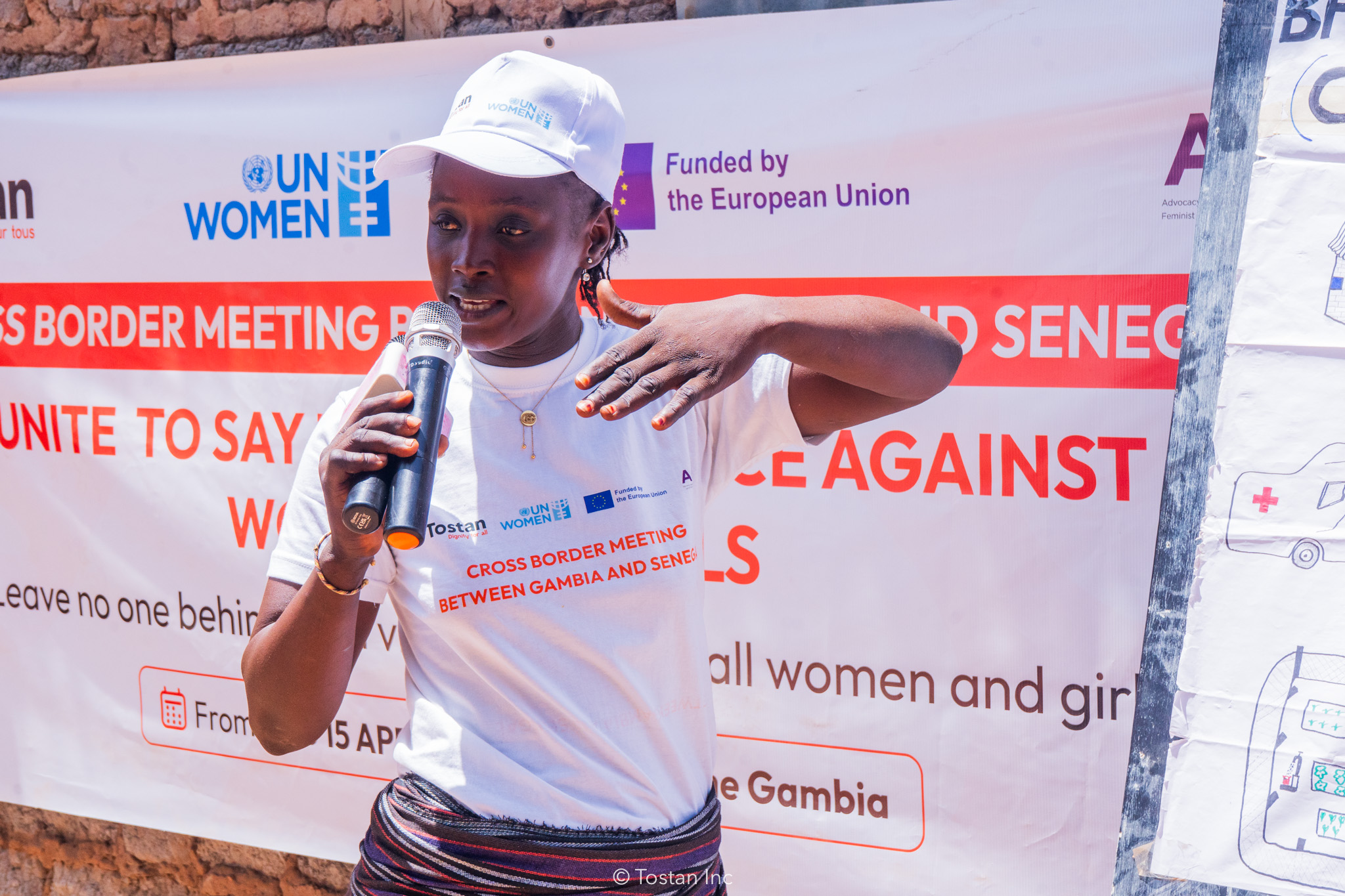
From 19 to 28 August 2025, 27 representatives of grassroots women-led organizations, government services and civil society from Senegal and The Gambia met at the Tostan Training Center in Thiès to strengthen community advocacy to end violence against women and girls.
Worldwide, about 736 million women, almost one in three, have experienced physical or sexual intimate partner violence or sexual violence from a non-partner in their lifetime (WHO, 2021). Laws have advanced. The violence has not retreated. Women-led groups closest to it remain among the least funded and furthest from decision-making.
The training is part of ACT (Advocacy, Coalition Building and Transformative Feminist Action to End Violence Against Women), a UN Women programme, funded by the European Union, working to end violence against women and girls by strengthening the feminist organizations and coalitions that drive change locally. Tostan, an implementing partner, supports federations of women-led Community Management Committees, passing on the community-led approach to social norms change behind its Community Empowerment Program so they lead the change themselves.
Three voices in the video trace the method. Social worker Seydou Gadjigo takes back nonviolent communication, made practical
through images, gestures, and everyday interactions.
Change imposed on intimate matters, however well meant, breeds resistance. Change reached through dialogue tends to hold.
For Rokhaya Sow, of the ECOWAS Women’s Peace and Security Network (REPSFECO), it starts with trust, so people share
even the most personal aspects of their lives.
Trust also binds communities that share families and practices across the border, and the response must cross it too.
Nyima Faye, of The Gambia’s Ministry of Gender, Children and Social Welfare, links this work to existing laws and policies. A law protects a woman only when her community knows it and stands behind her.
Ministry and communities, working together, carry it the last mile.
Watch them in their own words below.