
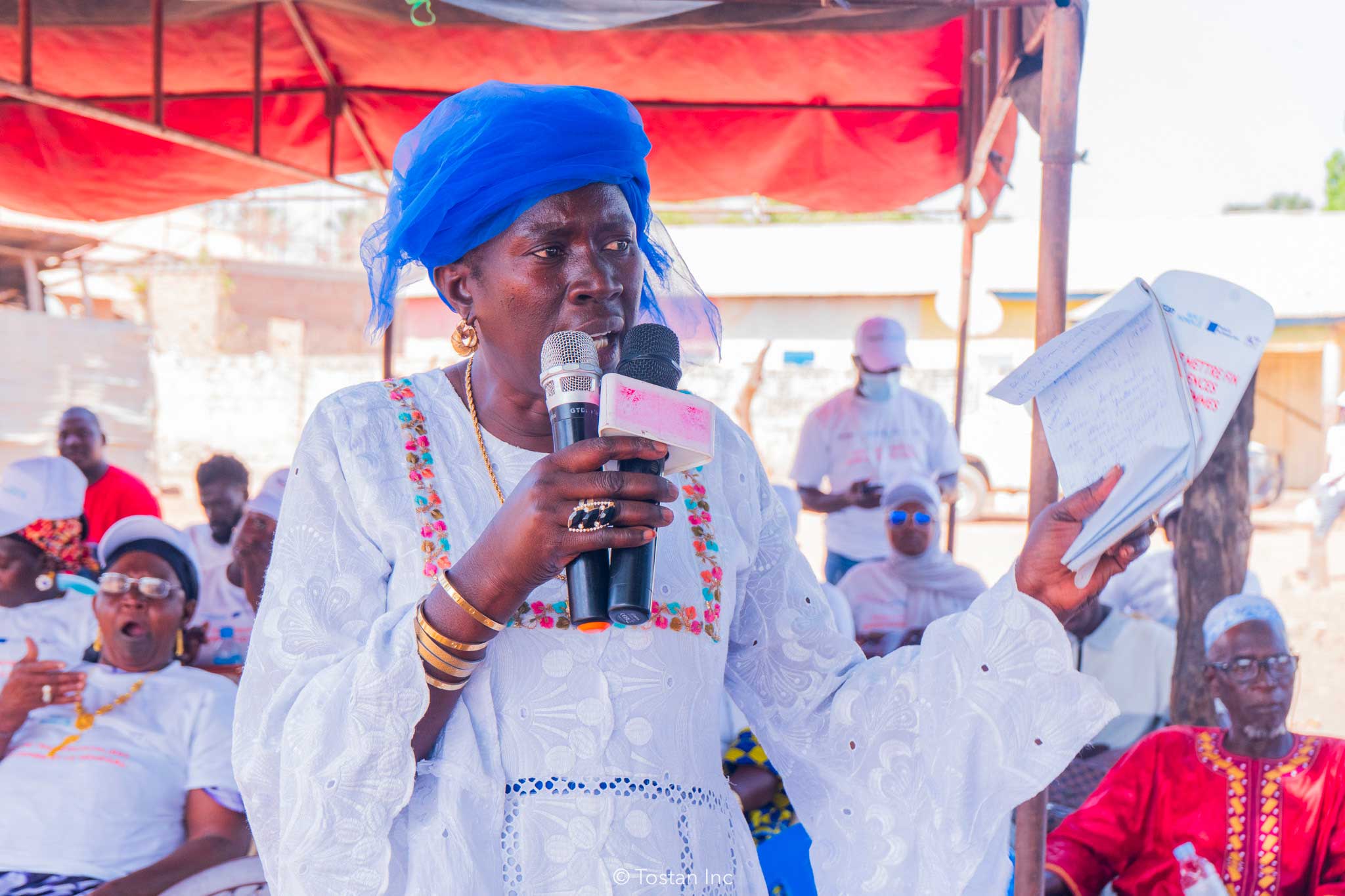
From Kolda to Dobong Kunda, Gambian and Senegalese communities are building cross-border commitments to protect women and girls.
Dobong Kunda, The Gambia — I remember standing in a small village along that frontier, trying to buy candy for children with Senegalese CFA francs. The women smiled and shook their heads gently. “We are in Senegal,” one said, “but we use The Gambia dalasi.”
They paid for goods in dalasi, sent relatives to Gambian hospitals, and built homes in architectural styles borrowed from across the nearby border.
Nothing in their daily lives seemed to follow the map.
And yet, when the conversation turns to violence against women, those same lines become something else entirely. Not spaces of exchange, but barriers that isolate women from services, justice, and sometimes even from one another.
That tension is what makes what happened in Dobong Kunda, in The Gambia’s Central River Region, so significant.
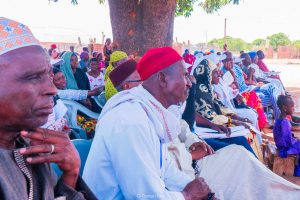
On April 15, 2026, 17 communities from Senegal’s Kolda region crossed into The Gambia to meet 100 Gambian communities gathered there—not for trade or healthcare, but to sit together and build a shared commitment that could move beyond borders.

The gathering was part of the ACT project—the Advocacy, Action and Transformative Feminist Coalition to End Violence Against Women in West and Central Africa—implemented by Tostan with support from UN Women. It brought together community leaders who rarely appear in policy documents but often carry the weight of social change, alongside activists and government partners from both countries.
Together, they worked to strengthen joint action to end violence against women and girls and to build shared accountability across communities.
These are not formal officials. They are farmers, mothers, traders, religious leaders, and local organizers who, over years of participating in community education and dialogue through Tostan’s program, have developed knowledge of human rights, mediation, and collective decision-making.
That process has shifted who is seen as having a legitimate voice on early marriage, female genital cutting, and domestic violence —and, in some places, who is trusted to intervene when harm occurs.
The work they are engaged in aligns closely with national priorities. Senegal’s development framework, the SND 2025–2035 vision, places the protection of women and girls and their participation in public life at the center of national transformation. The Gambia’s Recovery-Focused National Development Plan (2023–2027) similarly frames ending gender-based violence and strengthening women’s leadership as essential to justice and social cohesion.
It also reflects regional commitments. ECOWAS Vision 2050 identifies gender equity and citizen security as foundations of regional integration. What is taking form in the Senegal–Gambia corridor shows how those commitments can move beyond policy language—not only through governments and institutions, but through communities that already share lived realities and are building systems of accountability that match them.
In that sense, this is not an external complement to state ambition. It is its extension into places where formal institutions are thin, and where communities themselves become the primary infrastructure of change.
When people from Kolda and the Central River Region sit together, they do not need to translate their experiences for one another. The economic pressures, the cultural negotiations, and the silence that often surrounds violence are already understood on both sides. That shared recognition is what gives these conversations political weight, beyond symbolism.
And when communities make public commitments—before religious leaders, local authorities, and civil society actors from both countries—those commitments take on a durability that is harder to ignore or reverse.
Progress remains uneven, and harmful practices persist. But the terms of the conversation are shifting, and so is who is recognized as having the authority to lead it.
This is the kind of community-led infrastructure that national and regional frameworks often struggle to anticipate—and rarely know how to adequately support. The Senegal–Gambia corridor offers a model worth paying attention to.
At the border, my CFA francs meant nothing. But the laughter of the women and girls did. It carried an ease that official maps rarely capture. And it is that ease—shared, familiar, and increasingly organized—that now travels across communities, alongside a growing conviction that the work of change does not stop where the map says it should.