

Mariétou Baldé once helped women give birth in Senegal’s Kolda region. Now an elected official, she spoke on Nov. 15 for 55 communities that have decided to stop cutting their daughters and marrying them off as children.
COUMBACARA, Senegal — Mariétou Baldé was up before dawn on Sunday.
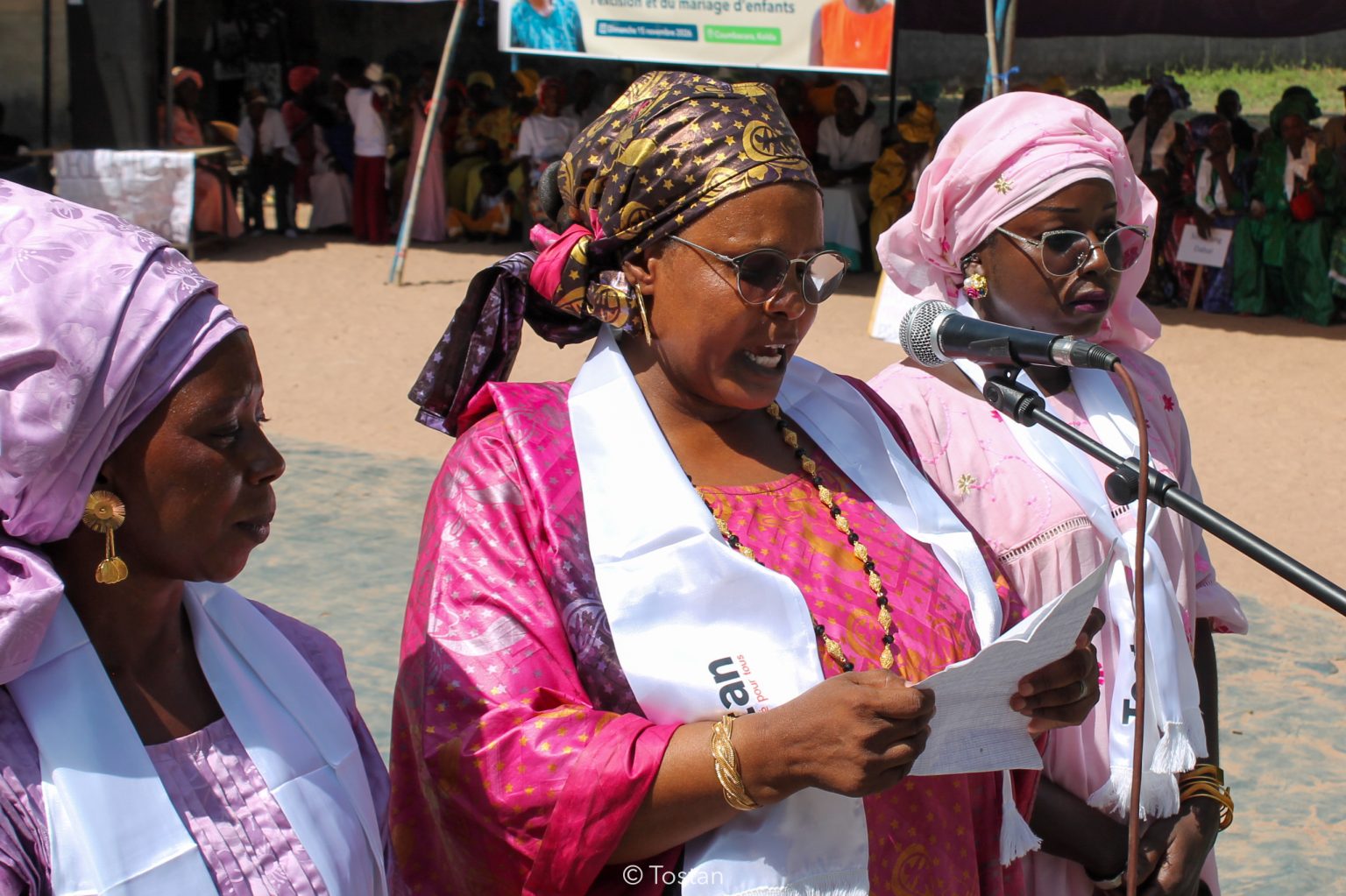
The communities had agreed to meet in Coumbacara for the long-awaited declaration that they were abandoning female genital cutting and child marriage.
She packed a few things in her handbag and walked to her village’s bus station, already crowded with travelers, street vendors and the young apprentices who work the minibuses.
Bags and goods were piled dangerously high on the roof rack. When the last seat was taken, the driver pressed the accelerator three times to announce the departure.
An hour and a half later, Coumbacara.
When she stepped off the minibus, the schoolyard was already filling with people of every generation. She had made trips like this many times, carrying the same conversation from one village to the next. This time, she had come to speak for 55 communities.
She had learned what was at stake in the room where women give birth. As a traditional birth attendant in Kolda, she delivered many babies.
In women who had been cut as girls, she said, labor ran longer, the pain was worse and the tearing deeper. She saw bleeding and infections, and babies who struggled for oxygen. Sometimes the mother or the child did not survive.
I have seen with my own eyes what cutting does to our children, she said.
She carried what she saw out of the delivery room. She took part in Tostan’s education program, then worked as a community mobilizer, raising the subject in one village after another. Today she is a mother and the elected deputy mayor of Dialambéré, one of the five communes that declared on Sunday.
Her region is where that work is hardest. In Kolda, nearly three in four women ages 15 to 49 have been cut, more than three times the national rate, according to Senegal’s 2023 health survey. More than half of young women in the region were married before 18.
In Coumbacara, she took the floor “on a subject that touches the lives of our daughters,” as she put it, and spoke directly to the religious and community leaders.
I am asking religious and community leaders to join us in declaring an end to this practice in our communities,” she said. Ending it, she added, also means “allowing our daughters to give birth safely, without fear.
Later in the ceremony, before more than 700 people, she read the declaration in Pulaar, the language of the villages that wrote it. Fifty-five communities in the Mampatim district promised that their girls would no longer be cut or married off as children. For 42 of them, it was the first time.
For generations, we carried on a practice we believed was essential,” the declaration says. “What was tolerated yesterday is no longer acceptable today.
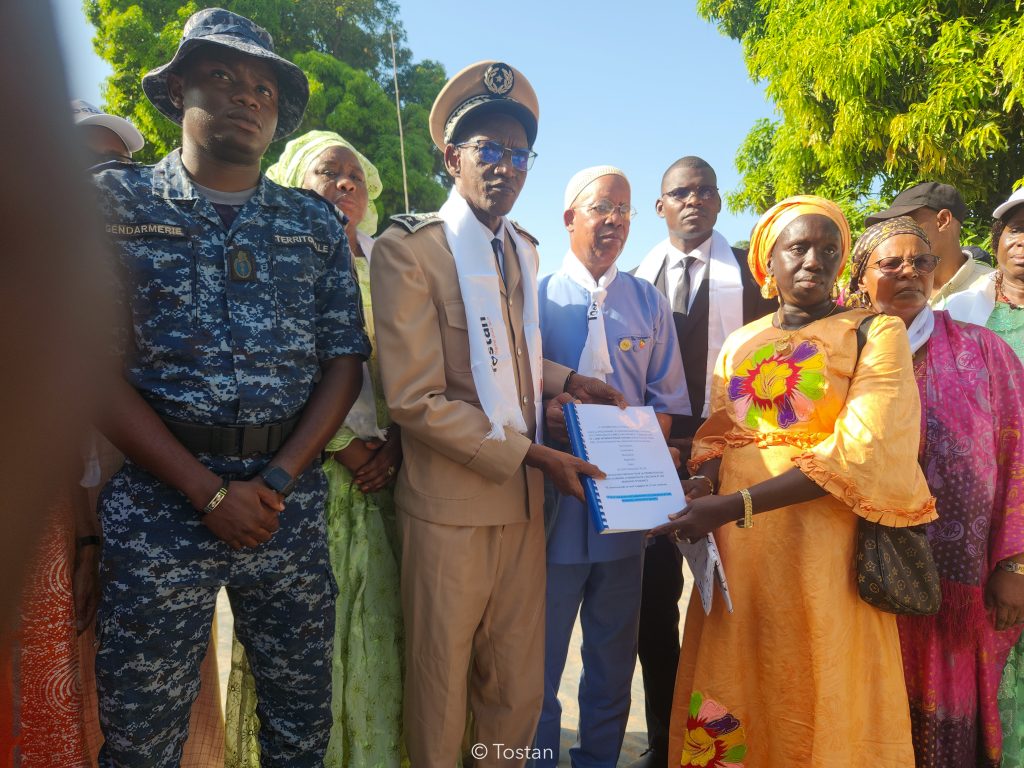
The sub-prefect received the communities’ written commitment, putting the promise on the state’s record. It was Kolda’s second declaration this year, after 27 villages declared in Thiarap in June. The decision was built over months, in classes taught in Pulaar in 20 centers across Kolda. There, participants discussed human rights, health and how to run their villages’ affairs. They took those conversations home, then to neighboring villages. Families who keep a practice together can only stop it together. Some villages had already gone further.
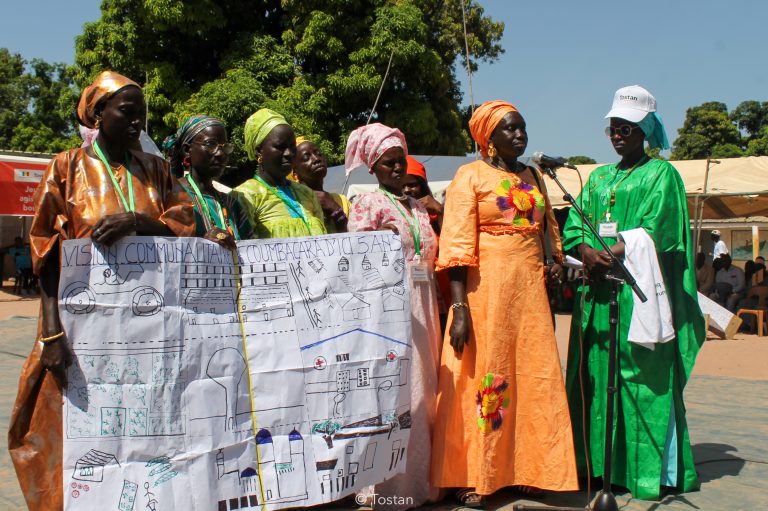
They counted the children who were not in school and bought them slates and supplies, said Amadou Baldé, the mayor of Coumbacara. A declaration is a public promise, not a guarantee, and keeping it takes years. Thirteen of the villages in the schoolyard had made this promise before. On Sunday they came back to make it again, in front of their neighbors.
Since 2009, my village has completely abandoned cutting,” Mariétou Baldé said. “Together, we have protected our girls.
A girl born in her village that year, turns 17 this year. For the 42 villages that declared for the first time on Sunday, the count starts now. Tostan’s program in Kolda is supported by UNFPA, with funding from Global Affairs Canada and the Italian Agency for Development Cooperation (AICS).