

A preventable childbirth injury left Alima Malinké withdrawn and isolated in her village of Zanso, in Mali’s Koulikoro region. After targeted intervention by Tostan and UNFPA, she is reclaiming her place in the community — and her story sheds light on a health issue too often hidden in rural West Africa.
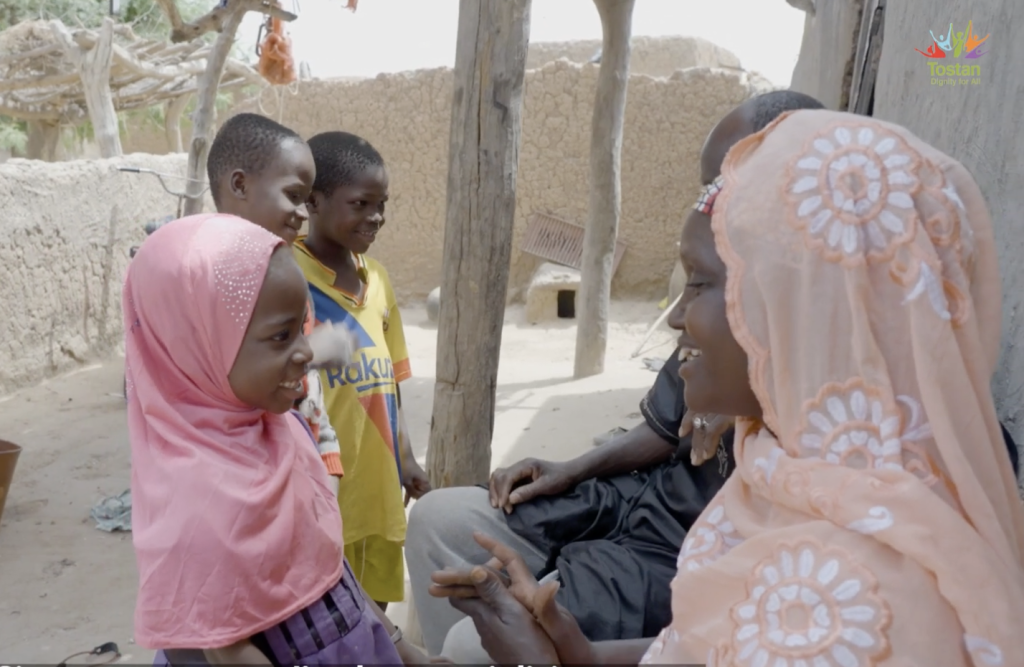
Alima Malinké enjoys a joyful moment with her husband and children in her village after receiving treatment for obstetric fistula
Obstetric fistula, a preventable childbirth injury, occurs when prolonged or obstructed labor causes a hole between the birth canal and the bladder or rectum. In West Africa’s rural areas, where access to timely medical care is limited, women who develop fistula often face severe health complications — and social isolation. Many withdraw from public life, fearing stigma and rejection. What begins as a medical issue can quickly become a crisis of dignity.
Alima’s story began like that of many women in her community. She married at seventeen and became a mother soon after. Her first two pregnancies went smoothly, but during her third, childbirth complications left her incontinent — a condition she did not understand at first.
“Despite my family’s support,” Alima recalls, “my self-esteem was so low that I stopped going to the market. I didn’t want to be close to people. Even the food I cooked received mixed reactions — some would eat it, others stayed away.” She is part of a broader reality: women across Mali who face isolation and shame due to preventable birth injuries.
In Zanso, as in many rural villages, the cost and distance to reach treatment were beyond her family’s means. But change came when Tostan, in partnership with UNFPA, began working with local health actors to identify and support women living with obstetric fistula. Community health workers visited each household, ensuring that no one was left behind. When they met Alima, they listened to her story — with empathy and respect.
Beyond the medical response, Tostan’s community-based approach played a key role in reaching women like Alima. Through its social mobilization activities, the organization worked with local facilitators to identify urgent cases, raise awareness about stigmatizing conditions such as fistula, and encourage compassion and dialogue within villages. By engaging entire communities, these efforts helped ensure that no woman remained isolated — and that recovery went beyond physical healing to include dignity, confidence, and social reintegration.
Soon after, Alima and other women from neighboring villages were referred to the regional hospital in Koulikoro for free, high-quality treatment.
“We received mosquito nets, food, and a safe place to stay,” she says. “Our transport was paid for, and we were treated with kindness and respect.” After her surgery, Alima’s life began to change. “I am no longer in pain,” she says softly, “and I can smile again.”
As she returned to her village, Alima’s confidence grew. She began taking part in group discussions, attending ceremonies, and reconnecting with neighbors who had once kept their distance. Today, she embodies both personal resilience and the power of community-led care.
Across Mali, partnerships between Tostan, UNFPA, and community networks continue to bring hope to women like Alima. Each healed woman represents more than a restored body — she embodies a community’s commitment to compassion, equality, and dignity for all.
In Alima’s words:
“Before, I felt alone. Now, I feel part of the world again.”
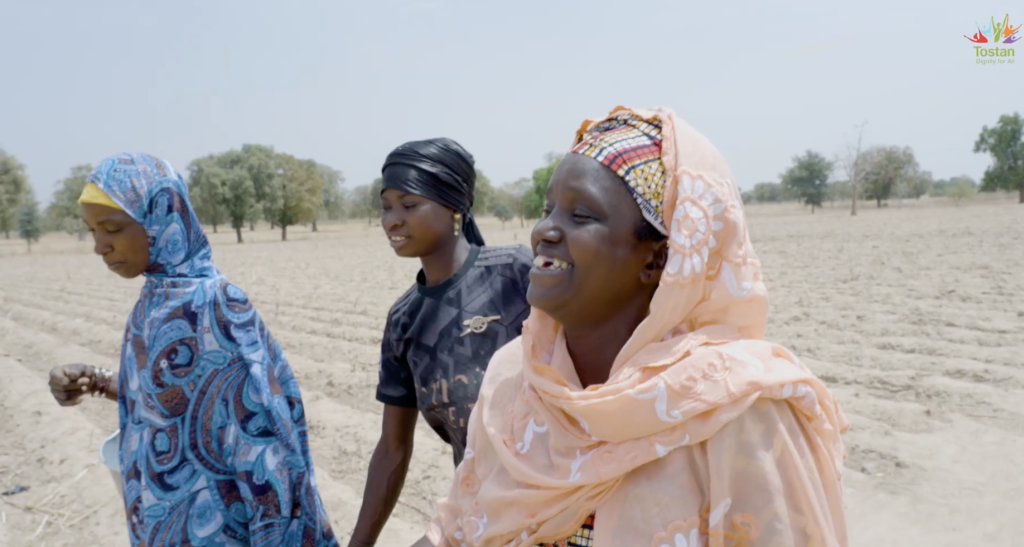
Alima Malinké regains confidence, walking and smiling with friends in her village.