

Security patrols can stop violence from spreading. They can’t rebuild a friendship between two neighbors who no longer trust each other.
That gap is what’s playing out in northern Benin, along the border with Burkina Faso and Niger, where competition over grazing land and water between farmers and herders has hardened for years. The threat spilling south from the Sahel has sharpened by the month. In March 2026, an armed group killed 15 Beninese soldiers near the Niger border. In February, the International Crisis Group placed Benin on alert for further escalation. And in December 2025, a group of soldiers briefly seized the state broadcaster in an attempted coup that cited the government’s handling of insecurity in the north among its grievances. Communities already stretched thin by that pressure are the ones this initiative is trying to reach.
In village meetings across the region, the pattern repeated: women stayed quiet, young people said nothing, and disputes went unresolved because no structure existed to resolve them.
“What communities were losing was not only stability, but trust,” says Adebayo Ablaye, a specialist in behavior change communication.
To address that, Tostan partnered with GIZ and the ECOWAS Regional Stabilization and Development Fund (FRSD) on a community initiative known locally as YIDDE-SOUROU — Fulfulde for “Love,” “Patience,” and the “Advantage of Union.”
The approach doesn’t start with security. It starts with a room. Women who’d learned to stay silent in these gatherings, young people, religious leaders, farmers and herders on opposite sides of the same disputes, and people with disabilities sat together in seminars held in the languages they actually speak at home and talk openly about conflict, grief, and what happens to a community when no one is heard.
Mental health sat at the center of that conversation, not at its margins. In communities carrying chronic insecurity and economic hardship, untreated trauma doesn’t stay private but rather isolates people from each other and wears away at whatever holds them together.
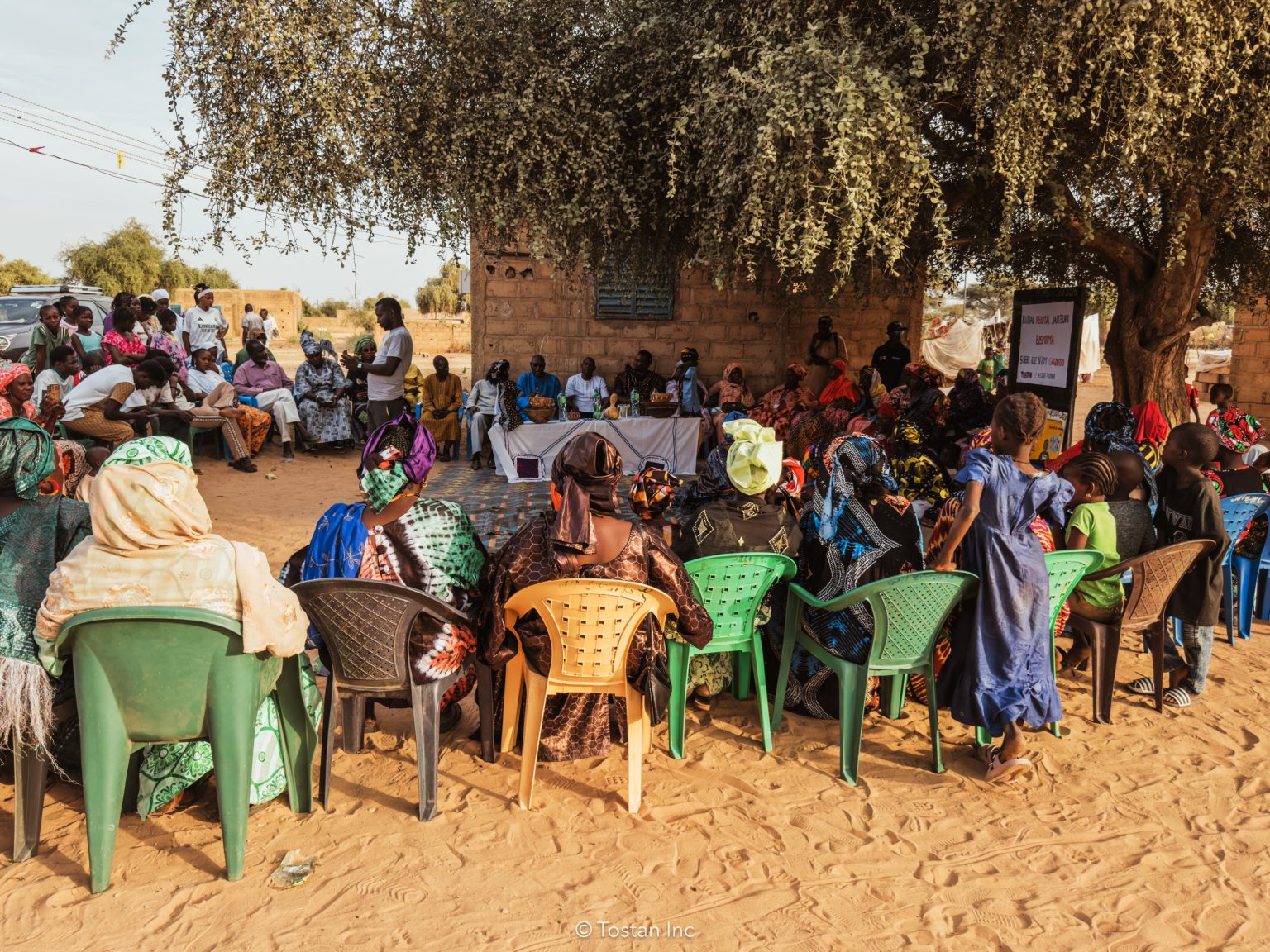
“There is no health without mental health,” says Fatou Khouma, a mental health specialist involved in the project. “Psychosocial support is essential not only for individual well-being, but also for strengthening social cohesion.”
For many participants, it was the first time their community had spoken about mental health at all.
The method changed too. Facilitators stopped arriving after a dispute to calm things down. They started arriving before one, just to listen and training local leaders to notice emotional distress early, open dialogue before it hardens into conflict, and mediate disputes using tools built inside the community rather than imported from outside it.
By October 2025, nearly 3,000 people across the Atacora, Donga, and Collines regions had taken part. Twelve Community Governance Committees now exist because of it. Young people hold more than 58% of the leadership seats within them. Women make up just over half of everyone who participated, in a region where, not long ago, many of them wouldn’t have spoken in that room at all.
For Salahou Yekiny Abdoul Wahab Abdoul, vice president of the disability rights organization, that shift in timing is the whole point.
“Before, many interventions focused only on solving problems after tensions appeared,” he says. “Now we try to listen earlier, involve everyone, and create dialogue before communities become divided.”
Northern Benin’s challenges haven’t disappeared. But in the villages where silence used to be the default, something has started to replace it: a conversation that happens before anyone needs one.