
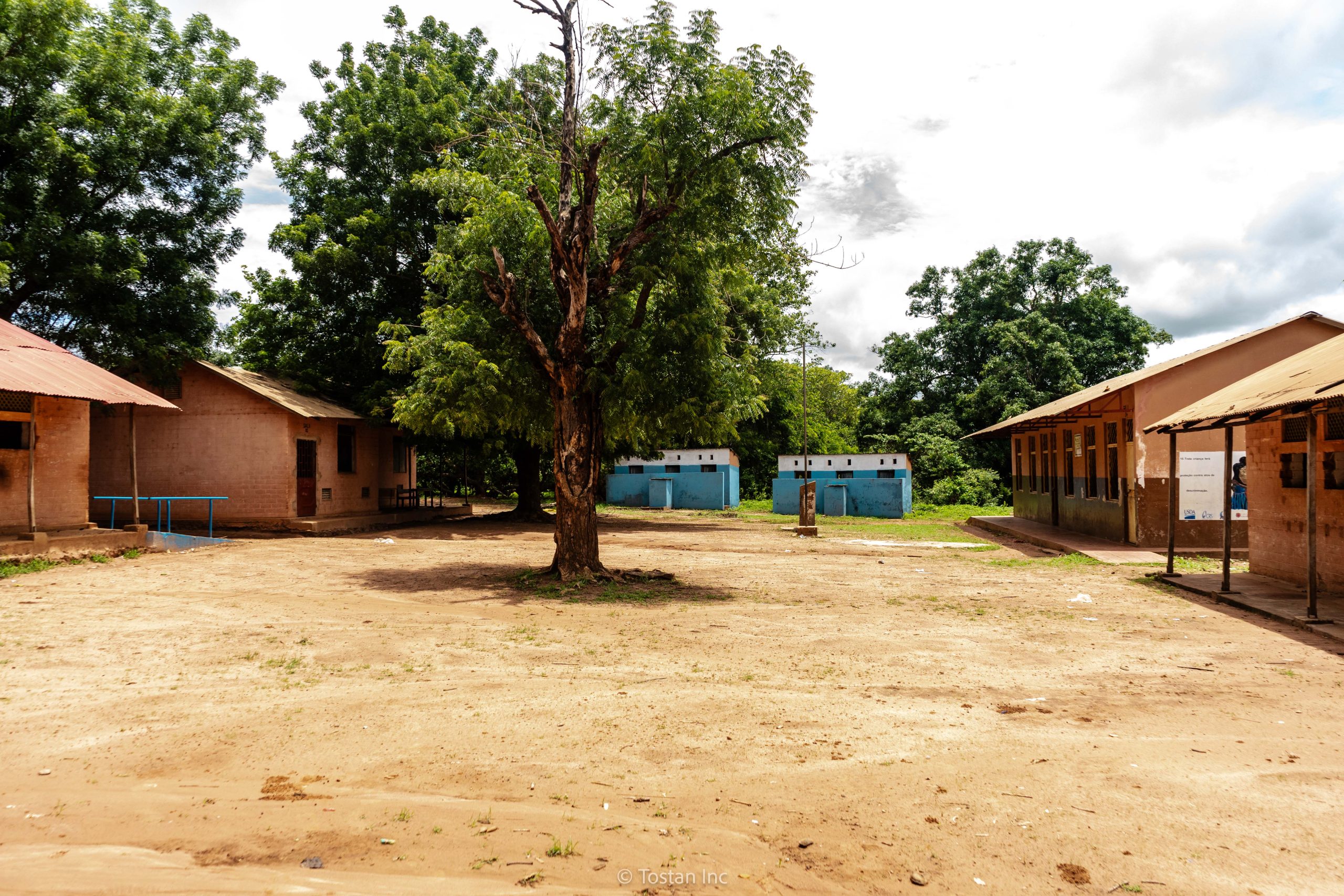
In Guinea-Bissau, 27.7% of primary school-age children are out of school. In rural areas, the rate exceeds 36%. Only 12% of children aged 7 to 14 have basic reading skills, and only 7% can demonstrate numeracy skills. These numbers describe a system under chronic strain, but they do not fully describe what that strain looks like in a single village, where the nearest functioning school is too far to walk and the roads make the distance worse.
In Nhabidjom Sinho, a rural community in Guinea-Bissau, that was the condition most families had accepted. Until 2025, when the Community Management Committee decided not to.
The CMC’s 19 members each contributed 1,250 FCFA, roughly $2.20. With the money raised (around $43), they renovated a disused school building and bought basic supplies for 48 children. They also organized to hire a local teacher and cover that teacher’s salary. Forty-eight children who had no school now had one.
“We understood that education is not only a child’s right, but also the community’s responsibility,” said Djucou Baio, the CMC’s coordinator. “That is what pushed us to act, so that all children, especially those left out because of distance or poor roads, could finally go to school.”
The decision grew from years of engagement with Tostan’s Community Empowerment Program, through which community members built knowledge of human rights, child rights, and collective decision-making. That knowledge did not build a school. The community built the school. What the program provided was a framework for understanding why the situation was unacceptable and who had the standing to change it.
That framing connects directly to what Guinea-Bissau’s own education policy has long identified as a structural gap. The Education Sector Plan, built around the national Terra Ranka strategy, placed community access and local governance of education at the center of the country’s development vision.
Guinea-Bissau’s national frameworks have consistently identified inclusive, accessible, quality education for all as a defining priority, one that requires reaching communities where formal institutions are weakest. What the CMC in Nhabidjom Sinho demonstrated is that communities with knowledge and organizational capacity can act as that infrastructure, not as a substitute for state responsibility, but as its extension into places the state has not yet reached.
Forty-eight children are now in class. What Nhabidjom Sinho demonstrates is the kind of community-led action that Guinea-Bissau’s education priorities have long called for, and a sign of what becomes possible when communities have the knowledge and organization to act on those priorities themselves.